The published auction record across decades constitutes one of the most-systematic surviving documents of how the art and antiques markets have valued specific objects over time. Read superficially, it is a price history. Read carefully, it documents far more: shifts in scholarly attribution, changes in collecting taste, the rise and fall of specific categories, the impact of institutional acquisitions, and the migration of objects between private and public ownership. This article presents methods for reading the auction record as historical evidence.
The documentary value of auction records
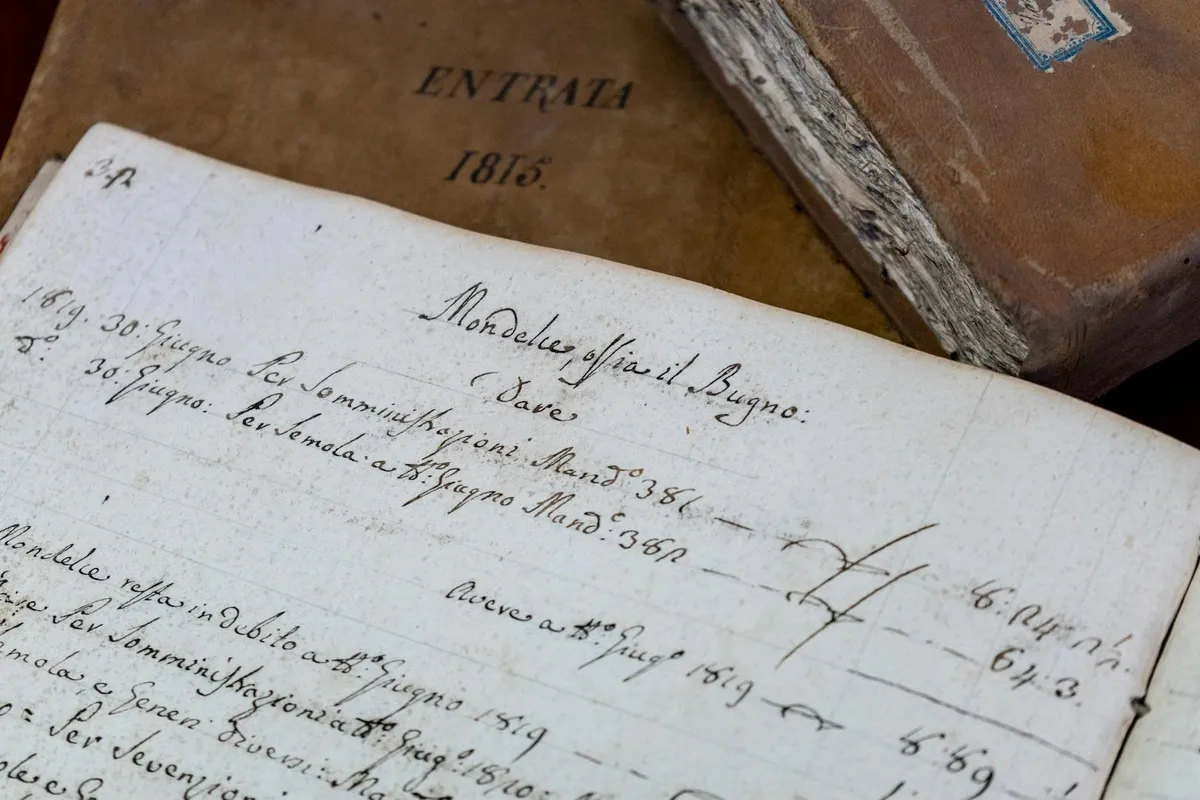
Auction houses have produced printed sale catalogues continuously since the mid-18th century. These catalogues record what was offered, how it was described, what attribution was assigned, and (in priced and annotated copies) what it sold for. Across two and a half centuries of records, the auction archive documents the trajectory of countless individual objects and the changing consensus about thousands more.
The catalogues are also documentation of scholarly consensus at the moment of sale. The attributions assigned in 1880 reflect the scholarly understanding of 1880; reattributions in subsequent sales document subsequent scholarship. Following an individual object through successive sales reads almost as a literature review of the scholarly opinion about that object across the period.
Long-term price trajectories: what they reveal
Category-level taste shifts
Comparing prices for entire categories across decades reveals taste shifts with unusual clarity. Victorian academic painting reached price peaks in the 1860s-1880s, declined dramatically through the early 20th century, reached its nadir in the 1940s-1960s, and has recovered partially in recent decades. Inflation-adjusted price trajectories make these shifts visible at category resolution.
Similar trajectories can be read for Georgian silver, Pre-Raphaelite painting, Italian Renaissance maiolica, Chinese export porcelain, and many other categories. The trajectories tell a history of taste in which objects come into and out of fashion in patterns that often correspond to broader cultural shifts.
Attribution shifts and value
Where an individual object has appeared in multiple sales over decades, the attribution history can be read alongside the price history. An object catalogued as "by Rembrandt" in 1880 may have been sold as "studio of Rembrandt" in 1950, "circle of Rembrandt" in 1990, and "by Rembrandt" again in 2015. The price trajectory parallels the attribution history. The combined record documents how scholarly consensus shifted.
For certain artists with well-known attribution disputes (Rembrandt, Vermeer, Caravaggio), the auction record across the 20th and 21st centuries provides a parallel history to the published scholarly literature. The two should be read together.
Institutional acquisition impact
Major museum acquisitions remove works from the market and produce comparative price effects on similar works. The acquisition by a major institution can validate a category, attract additional collector interest, and elevate prices for comparable works for years following. The opposite is also true: institutional deaccessioning can depress prices for a category for extended periods.
Reading individual object trajectories
Tracking individual objects through successive sales requires patience but is increasingly tractable through online auction databases. Major auction houses now provide online access to historical catalogues; specialized aggregator services (Artnet, Artprice) compile records across houses.
An individual object's sale history typically reveals:
- How attribution has been treated by successive cataloguers
- How condition has changed across sales (or how condition descriptions have evolved)
- How the object has moved between collectors, dealers, and institutions
- What price discipline has been applied at each sale
- Where the object has been exhibited and how it has been published
For provenance research, auction catalogue entries are a primary source — often the only documentation of certain ownership periods. Reading the auction record carefully can fill provenance gaps that other sources cannot.
Common interpretive errors
Conflating sale price with value
Auction sales reflect specific moments under specific conditions: which buyers were present, what other works were available, market liquidity at the moment of sale. Prices for comparable works can vary substantially across sales for reasons unrelated to underlying value. Single-sale evidence is weak; multi-sale comparison strengthens evidentiary claims.
Ignoring inflation
Long-term price comparisons require inflation adjustment to be meaningful. Real-dollar (inflation-adjusted) trajectories often tell different stories than nominal trajectories. A "record price" in nominal terms may represent declining real value over decades for some categories.
Selection bias in surviving records
The auction record reflects works that were sold at auction. Works held in private collections, donated to museums, or destroyed do not appear in the record. The record over-represents objects that were considered marketable at successive moments and under-represents objects that were considered too risky, too damaged, or too uncertain in attribution to bring to market.
Confusing house records with category records
Christie's, Sotheby's, and Bonhams have specialized in different categories at different times. Drawing conclusions about a category from the records of a single house can produce distorted analyses. Cross-house comparison is necessary for category-level claims.
Methodological practice
Serious use of the auction record as historical evidence requires methodological discipline:
- Define the question clearly (specific object, comparable group, category, geographic market)
- Identify the relevant catalogues and sales records
- Compile data with attention to attribution, condition, and other modifying details
- Adjust for inflation when making cross-period comparisons
- Test conclusions against multiple sources rather than single records
- Acknowledge selection biases and gap risks in the surviving record
Done carefully, the analysis produces meaningful evidence about how taste, scholarship, and the market have shifted across decades. Done carelessly, it produces misleading conclusions presented with false confidence.
The broader scholarly value
The auction record is increasingly recognized as a primary source for art historical and decorative arts scholarship. Recent dissertations and monographs across multiple specialties have made central use of long-term auction records to reconstruct collecting histories, attribution disputes, and category trajectories. The practice will continue to develop as digital access to historical records expands.
For collectors, dealers, and institutional curators, fluency in reading the auction record is now an expected professional capability. The record rewards the time invested in learning to read it.
Source notes
Methodology draws on the auction-record analysis tradition exemplified by Iain Pears, The Discovery of Painting (1988), and recent scholarship in the journal Provenance. Major archival collections referenced include the Frick Art Reference Library Sale Catalogues collection and the Getty Provenance Index Databases.