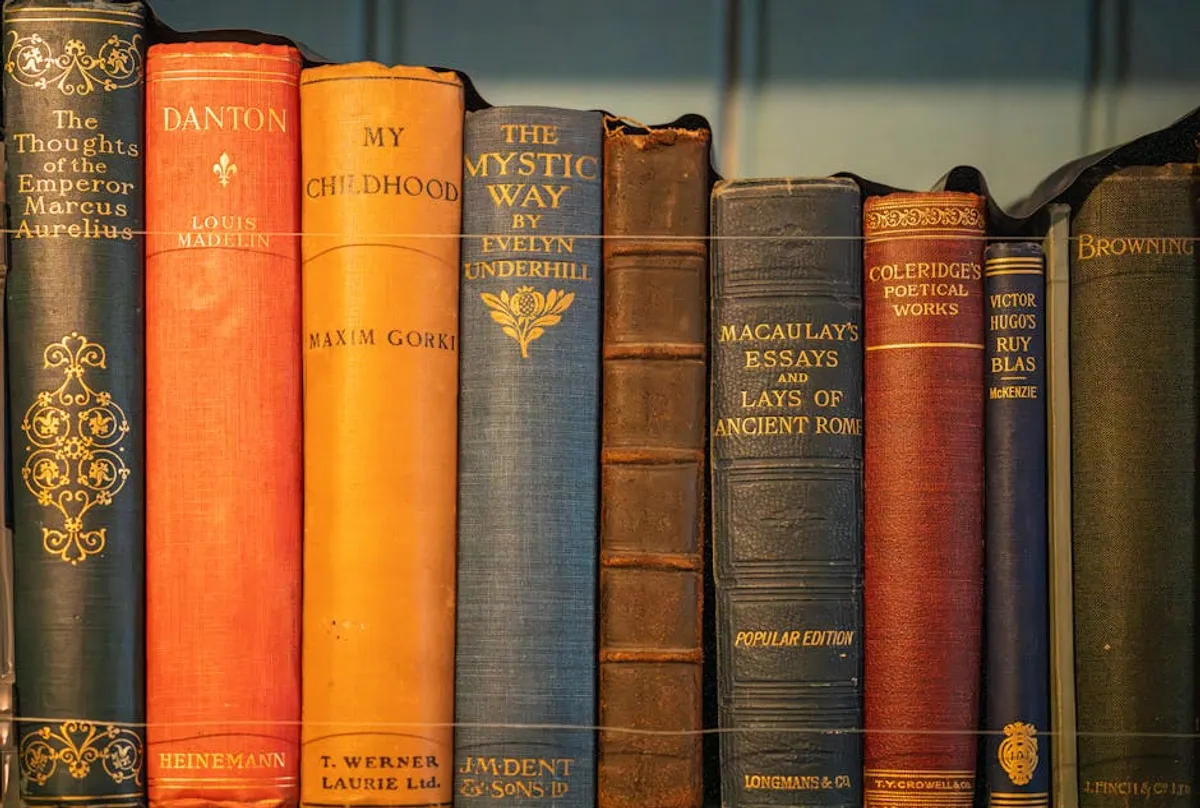
Entering the world of rare book collecting requires a precise vocabulary to navigate effectively. Without a clear understanding of fundamental terms, new collectors risk misidentifying items, overpaying for misrepresented books, or overlooking valuable opportunities. This foundational knowledge is not merely academic; it directly impacts valuation, authenticity, and the long-term desirability of acquisitions. Familiarity with specific terminology for condition, edition, and physical characteristics equips collectors to make informed decisions, communicate accurately with dealers, and build a collection with confidence and discernment. Familiarity with fundamental terms for antique books equips collectors to make informed decisions, communicate accurately with dealers, and build a collection.
Understanding Book Condition
Condition is paramount in rare book collecting, often dictating a book's market value more than any other factor. A nuanced understanding of condition grades and common flaws is essential for accurate assessment.
Condition Grades
Book condition is typically assessed on a standardized scale, though minor variations exist between dealers. These grades describe the overall state of the book and its components.
- Fine (F): An unread, pristine copy, as new, without flaws. This is the highest possible grade.
- Near Fine (NF): A book that appears new but may have minor, almost imperceptible flaws.
- Very Good (VG): A clean, tight copy with only minor wear. It may show slight rubbing to covers or spine, or a small crease.
- Good (G): An average used book, showing typical wear. It will be complete but may have some defects such as bumped corners, light foxing, or a slightly cocked spine. A "good" book is not necessarily in "good" condition in the colloquial sense.
- Fair (FR): A worn copy with significant defects that may impact its appearance or integrity, but it remains readable and complete.
- Poor (P): A heavily damaged book, possibly incomplete, with major flaws like detached boards, heavy staining, or missing pages. Usually only collected if extremely rare or for specific research purposes.
Common Condition Flaws
Beyond general grades, specific flaws are frequently noted in descriptions. Recognizing these terms helps in understanding the book's physical history and potential impact on value.
- Foxing: Brownish-yellow spots or stains, typically caused by humidity and acidic paper. It resembles rust spots.
- Toning: General discoloration or browning of paper, often due to age, light exposure, or acidic content.
- Chipping: Small pieces missing from the edges of covers, spine, or dust jacket.
- Rubbing: Abrasions on the surface of covers or spine, where color or material has been worn away due to friction.
- Sunning: Fading or discoloration of a book's spine or covers due to prolonged exposure to sunlight.
- Dampstain: A stain caused by moisture, often leaving a distinct outline or tide mark.
- Ex-library: A book that was once part of a library collection, typically identifiable by stamps, pockets, or other library markings. These copies are generally less desirable to collectors due to their altered state and history of heavy use.
Pro Tip: Always prioritize books with their original dust jacket (DJ) if one was issued. A rare book's value can be significantly diminished without its dust jacket, especially for 20th-century titles. The condition of the DJ is assessed separately and is often as critical as the book's condition itself.
Decoding Editions and Printings
The specific edition and printing of a book are crucial for determining its rarity and value. Misunderstanding these terms can lead to significant collecting errors.
First Edition, First Printing
This is often the most sought-after version of a book for collectors.
- First Edition: The very first appearance of a work in book form. Identifying a true first edition can be complex, as publishers use various methods (e.g., specific colophon, date on title page, statement on copyright page) to denote subsequent printings or editions.
- First Printing: The first run of books produced from the first edition's typesetting. A book can be a first edition but a later printing (e.g., "Second Printing of the First Edition"). The first printing of the first edition is typically the most desirable.
Limited, Signed, and Inscribed Editions
These categories often command higher prices due to their scarcity or direct connection to the author.
- Limited Edition: A specific number of copies printed, often individually numbered and sometimes signed by the author or artist. The limitation statement (e.g., "One of 250 copies") is usually found on the limitation page.
- Signed: A copy bearing the author's (or illustrator's, etc.) autograph, typically on the title page or a dedicated signature page.
- Inscribed: A copy with a personalized message written by the author, often to a specific individual, in addition to their signature. Inscriptions can add significant value, especially if the recipient is notable or the message reveals new information.
- Association Copy: A book that once belonged to, was presented to, or was significantly associated with a famous or historically important person. This provenance can dramatically increase value.
Proof Copies and ARCs
These pre-publication versions are distinct from the final published book.
- Proof Copy: An uncorrected, pre-publication version of a book, often bound in plain wrappers. These are produced for proofreading and internal review.
- Advanced Reading Copy (ARC) / Uncorrected Proof: Similar to a proof copy, but typically distributed to reviewers, booksellers, and media before the official publication date. They are often bound in soft covers and may have different cover art or text from the final edition. ARCs are collected for their early state and scarcity.
Key Physical and Bibliographic Elements
Beyond condition and edition, understanding the physical components and descriptive practices helps in evaluating a book's integrity and authenticity.
Dust Jacket (DJ)
The removable paper wrapper protecting the hardcovers, often featuring artwork and blurbs. For many 20th-century and contemporary books, the dust jacket is an integral part of the book's aesthetic and commercial value. Its presence and condition are critical.
Endpapers, Flyleaf, Hinges, Joints
These components are part of the book's construction and often show early signs of wear.
- Endpapers: The sheets of paper pasted to the inside of the front and back covers, connecting the text block to the binding.
- Flyleaf: The unpasted half of the endpaper, which is usually blank.
- Hinge: The flexible area where the covers meet the spine.
- Joint: The exterior groove on either side of the spine where the cover boards meet the spine. Weak or cracked hinges and joints indicate structural instability.
Collation and Provenance
These terms relate to a book's completeness and history.
- Collation: The process of verifying that a book is complete and in the correct order, checking for all pages, plates, and maps as listed in a bibliographic description.
- Provenance: The history of ownership of a book. Documented provenance can add significant value, especially for rare or historically important items, as it establishes authenticity and a chain of custody.
Practical Application for New Collectors
Integrating these terms into your collecting practice means moving beyond casual interest to informed engagement. When reviewing a listing or inspecting a book in person, consciously apply this vocabulary. Ask specific questions about condition details, edition statements, and any unique features. Compare descriptions against known bibliographic standards for the title. This diligence protects your investment and enhances the satisfaction of building a meaningful collection.
Frequently Asked Questions
What is the most important term for a beginner to know?
Understanding "condition" and the associated grading scale (Fine, Very Good, Good) is paramount. A book's condition profoundly impacts its value and desirability, regardless of its rarity or edition.
Why are dust jackets so important for modern first editions?
For books published from the early 20th century onwards, the dust jacket is considered part of the complete published item, often featuring unique artwork and author information. A first edition without its original dust jacket can be worth significantly less than a comparable copy with a well-preserved jacket.
How can I verify a book's edition and printing?
This often requires consulting specialized bibliographies or dealer catalogs specific to the author or publisher. These resources detail specific points (e.g., copyright page statements, typographical errors, binding variations) that distinguish first editions and printings from later versions.
Does an "ex-library" stamp always devalue a rare book?
Generally, yes. Ex-library copies are less desirable to collectors due to institutional markings and typically heavier wear. However, for extremely rare or historically significant titles, an ex-library copy may still hold value if it's the only available copy or if its provenance connects it to a notable institution.