
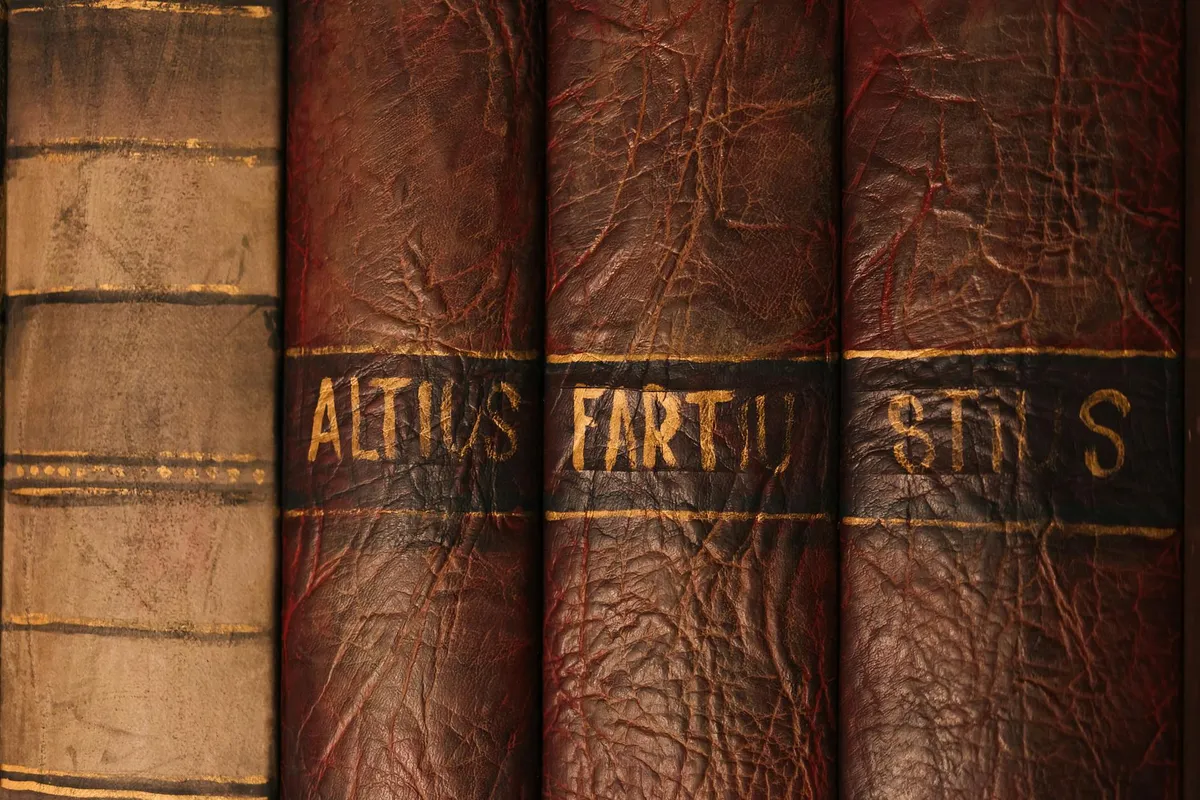
The bibliographic description of an antiquarian book — the dense paragraph that appears in dealer catalogues, auction listings, and reference bibliographies — compresses substantial scholarly information into compact form. To readers familiar with the conventions, the description conveys edition, issue, state, condition, completeness, binding history, and provenance. To readers unfamiliar with the conventions, much of this information passes unread. This article documents the standard conventions and what each element communicates.
The structural elements
A standard bibliographic description includes the following elements, in approximately this order:
- Author, title, place of publication, publisher, date
- Format and collation
- Edition, issue, and state
- Binding description
- Condition
- Provenance
- References to standard bibliographies
Each element follows established conventions. Departures from convention are themselves meaningful — typically signaling that the cataloguer encountered a feature requiring special note.
Format and collation
Format describes the physical size and folding pattern of the book's sheets. Common formats:
- Folio (2°): sheet folded once, producing two leaves per sheet
- Quarto (4°): folded twice, four leaves per sheet
- Octavo (8°): folded three times, eight leaves per sheet
- Duodecimo (12°), sextodecimo (16°): smaller formats from additional folding
Format is determined by examining the chain lines (the parallel lines visible in the paper from the wire mold of the papermaking process) and the watermark position. Cataloguers assert format on the basis of physical examination, not by simple measurement of page size.
Collation describes the structure of gatherings (the units into which sheets are folded and bound). The standard collational formula uses signature letters and leaf counts: π², A-Z⁸, Aa-Mm⁸ Nn⁴ describes a book with two preliminary leaves (often unsigned), 24 gatherings of eight leaves each (signed A through Z), 12 gatherings of eight leaves each (signed Aa through Mm), and a final gathering of four leaves (signed Nn). The collation establishes whether the book is complete and where any leaves may be missing.
Edition, issue, and state
These three terms have specific bibliographic meanings, often compressed in popular discourse but distinct in scholarly cataloguing:
- Edition: all impressions printed from substantially the same setting of type. A "second edition" represents new typesetting; a "second printing" of the first edition does not.
- Issue: a deliberate variant within an edition, typically created by the publisher for distinction in the marketplace. Different issues may have different title pages, dedications, or imprints.
- State: typically an undeliberate variant within an edition or issue, created by stop-press corrections, replacement of damaged type, or in-press adjustments.
These distinctions matter for valuation. First editions command premiums over later editions; first issues over later issues; certain states (with priority points indicating earliest production) over later states. The catalogue description will identify edition, issue, and state where established by the bibliography of the work.
Binding description
Binding description identifies the binding's material, structure, decoration, and period. Common categorizations:
- Contemporary binding: binding executed approximately at the time of publication, typically by the original purchaser or publisher
- Period binding: binding executed during the same century as publication but not necessarily at the time of publication
- Later binding: binding executed substantially after publication, typically in the 19th or 20th century
- Modern binding: contemporary 20th-21st century binding
Binding material (calf, morocco, vellum, paper, cloth), decoration (gilt-tooled, blind-tooled, panelled, plain), and binder identification (where attributable) follow standard descriptive vocabulary. Significant bindings — by named binders, with documented commissioning, or with notable decorative programs — receive extended description.
Condition
Condition description follows a sliding scale from "as new" (extraordinary for antiquarian books) through "very good," "good," "acceptable," and various qualifications. Specific conditions are noted: foxing (brown spotting from oxidation), dampstaining (water damage), worming (insect damage), tears, repairs, and missing material. The description aims to be accurate enough that an experienced reader can form a clear picture of the book's physical state without inspection.
Condition affects value substantially. A first edition in poor condition can be worth 10-25% of the same edition in fine condition. The price-condition relationship varies by category — older books are evaluated against more lenient standards than 19th-century books, which are evaluated against more lenient standards than 20th-century books.
Provenance
Provenance in antiquarian book cataloguing typically refers to evidence of prior ownership: bookplates, ownership inscriptions, marginalia, bindings indicative of named libraries, or documented sale histories. Significant provenance — ownership by historically important figures or major institutional libraries — adds substantially to value. Routine provenance (anonymous private ownership) is noted but adds little.
Marginalia by significant readers (annotations, corrections, commentary) can dramatically affect value. Marginalia by Coleridge, Voltaire, or other documented major readers transform a book from artifact into primary source. Identification of marginal hands is itself a scholarly specialty.
Bibliography references
Standard bibliographies provide the canonical references for major categories: ESTC for English-language works through 1800, USTC for European works through 1650, the relevant national or specialized bibliographies for narrower categories. Citation of the standard bibliography is shorthand for the body of scholarly information about the edition that has been compiled in the bibliographic literature.
The compressed paragraph
A typical antiquarian catalogue description compresses all of the above into perhaps three to ten sentences. To the experienced reader, the description establishes nearly everything important about the book. To the less-experienced reader, much of the description reads as opaque. The conventions reward learning; once learned, they enable rapid evaluation that would otherwise require extensive examination of each item.
Serious collectors, librarians, and dealers learn to read the conventions fluently. The investment is substantial but durable. Once acquired, the conventions serve across the full range of antiquarian book scholarship and commerce.
Source notes
Cataloguing conventions drawn from the published standards of the Bibliographical Society (London), the American Bibliographical Society, and the major institutional cataloguing manuals (Library of Congress, Bibliothèque nationale de France). Specific format and collational standards reference Fredson Bowers, Principles of Bibliographical Description (1949), which remains the canonical English-language treatment.