
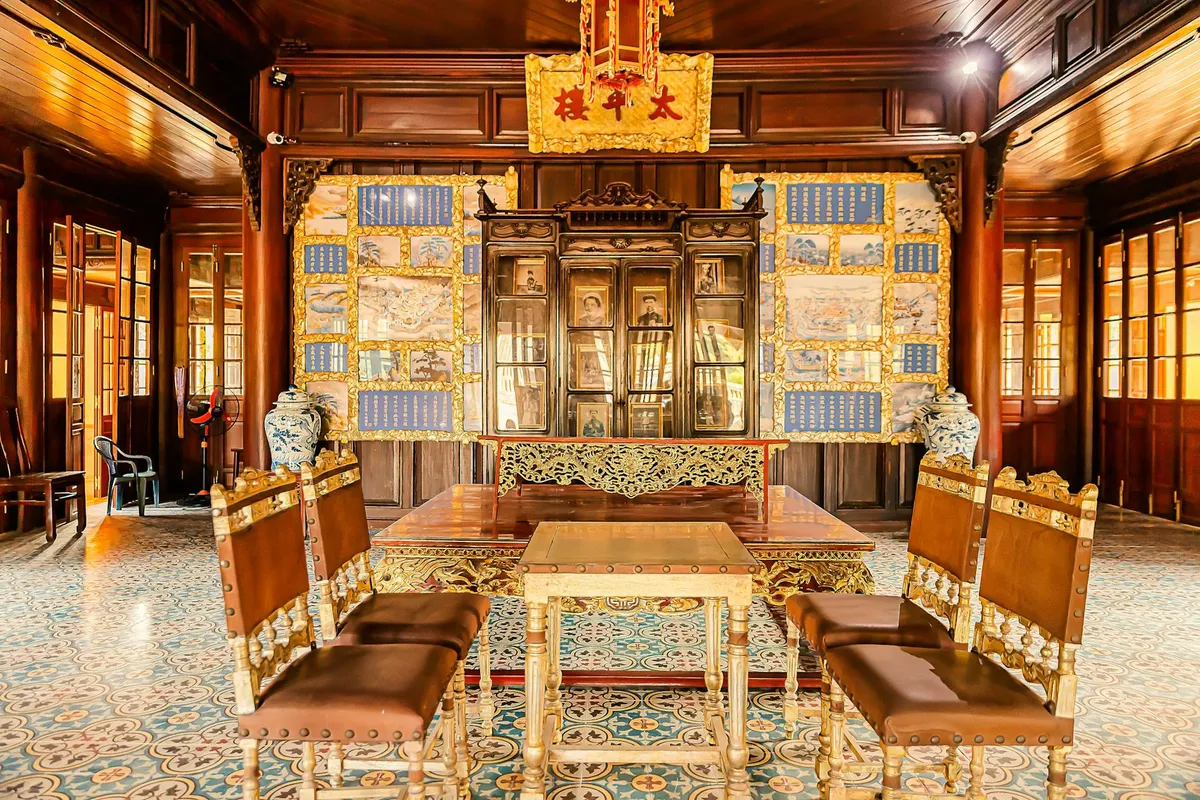
The popular taxonomy of 18th-century English furniture organizes the field around three names: Chippendale, Hepplewhite, and Sheraton. These designations refer in their original sense to published pattern books, not to individual makers, and the actual workshop landscape that produced surviving 18th-century English furniture was substantially more complex. Workshop identification beyond the standard names requires a different methodology and reveals a richer history. This article documents the methods now used in scholarly attribution and the workshops that have been identified beyond the canonical figures.
The pattern-book confusion
Thomas Chippendale's Gentleman and Cabinet-Maker's Director (1754, with subsequent editions through 1762) was the first published pattern book of furniture designs aimed at both makers and patrons. George Hepplewhite's Cabinet-Maker and Upholsterer's Guide (1788, posthumous) and Thomas Sheraton's Cabinet-Maker and Upholsterer's Drawing-Book (1791-1794) followed in the same tradition. Each pattern book disseminated design vocabularies that were adopted by makers across England.
The popular usage of these names as style designations ("Chippendale chair," "Hepplewhite sideboard") refers to the pattern-book vocabulary, not to the actual making. A "Chippendale" chair may have been made by Chippendale's workshop, by another London workshop following the pattern book, or by a provincial maker who had access to the published designs. The three categories produce furniture with substantially different characteristics, market values, and scholarly significance.
The actual workshop landscape
London in the second half of the 18th century supported dozens of cabinet-making workshops of meaningful capability. Chippendale's firm (and its successor partnership with Haig) was the most famous but not necessarily the most productive. Other major London workshops — including those of William Vile and John Cobb (royal cabinet-makers in the 1760s), Mayhew and Ince, Seddons of Aldersgate Street, and Gillows of Lancaster (with London showrooms) — produced furniture of comparable or superior quality to Chippendale's firm and in larger volumes for many categories.
Outside London, regional workshops in cities including Bath, York, Lancaster, Edinburgh, and Dublin produced significant furniture for local and regional markets. Provincial workshops adapted London designs to local taste, often with distinctive material choices (regional timbers) and decorative variants. Identification of specific provincial workshops has progressed substantially in recent scholarship.
Workshop identification methodology
Documentary evidence
Surviving workshop documents — bills, invoices, account books, inventories, correspondence — provide the strongest attribution evidence. Where a piece of furniture can be matched to a documented workshop bill (by date, description, recipient, and physical specification), attribution is direct. The Chippendale bills for the Harewood House commission, the Gillow sketches and orders preserved in the Westminster Archive, and the Cobb-Vile royal accounts all provide examples of furniture documented to specific makers.
Documentary attribution is comparatively rare. Most surviving 18th-century English furniture passed through ownership without documentation linking it to a specific workshop. Attribution must then rest on other evidence.
Construction methods
Workshop construction methods varied in identifiable ways. Drawer construction, dovetailing technique, secondary wood selection, drawer bottom installation, cock-bead application, and many other small techniques distinguish workshops. Where a workshop's methods have been characterized through documented examples, undocumented examples can be assessed against the methodological signature. Multiple workshops have been characterized in this way through systematic study of their documented work.
Decorative vocabulary
Specific carving habits, marquetry techniques, gilding methods, and decorative motif preferences distinguish workshops. The carving on a Vile-Cobb chair differs identifiably from carving on a Chippendale workshop chair, even when both follow similar pattern-book designs. Recognition of these distinctions is the connoisseurship dimension of furniture attribution.
Material choice
Timber selection, brass hardware sourcing, glass for mirror frames, and upholstery materials all reflect workshop sourcing patterns. Workshops with documented relationships to specific suppliers can sometimes be identified by the materials they used. The introduction of specific decorative timbers (rosewood, harewood, satinwood) at specific dates by specific London workshops has been documented in recent scholarship and provides datable attribution evidence.
Beyond the standard names: identified workshops
Recent scholarship has produced detailed characterizations of multiple 18th-century English workshops beyond Chippendale, Hepplewhite, and Sheraton:
- Vile and Cobb: royal cabinet-makers in the 1760s; characterized by exceptional carving quality and structural mahogany work.
- Mayhew and Ince: major mid-to-late century workshop; published their own pattern book (Universal System of Household Furniture, 1762) but produced significant work in styles beyond their published designs.
- Gillows of Lancaster: regional workshop with national reach; extensive surviving documentation including drawings and order books.
- Seddons of Aldersgate Street: very large London workshop; characterized by distinctive construction and decorative habits.
- John Linnell: partnership with father William Linnell; produced furniture for major patrons including the Duke of Marlborough.
Each of these workshops produced furniture historically attributed to "Chippendale" or "Hepplewhite" pattern-book designations until scholarship identified the specific workshop signature. Reattributions of major pieces continue as scholarly study progresses.
The market implications
Workshop attribution affects market value substantially. Documentation to a major workshop typically increases value 2-5× over uncertain attribution to "London, mid-18th century." The premium reflects scarcity, scholarly interest, and the documentary linkage to identified historical actors and projects.
The market has not always priced workshop attribution accurately. For decades, "Chippendale" attribution received the largest premium even when the actual making was demonstrably by another workshop. Recent decades have seen pricing discipline improve as scholarship has established the actual workshop landscape more clearly.
The current attribution practice
Mature contemporary attribution of 18th-century English furniture proceeds through the same synthesis described for paintings: documentary evidence where available, construction analysis, decorative vocabulary recognition, and material analysis combined. Strong attributions require multiple converging lines of evidence; weak attributions are appropriately marked as such.
The popular vocabulary that organizes the field around three names will probably persist. Within scholarly practice, the field has moved beyond it, and serious collecting and scholarship engage with the actual workshop landscape that the standard names obscure.
Source notes
Workshop identification methodology drawn from the published scholarship in Furniture History (the journal of the Furniture History Society) and the catalogues of the Christie's and Sotheby's English furniture departments. Specific workshop characterizations reference the published monographs on Chippendale (Christopher Gilbert), Vile and Cobb (Geoffrey Beard), Mayhew and Ince (Hugh Roberts), Gillows (Susan Stuart), and others.